Can You Use a Calculator on the CMA Exam? A Guide to Prometric Rules.
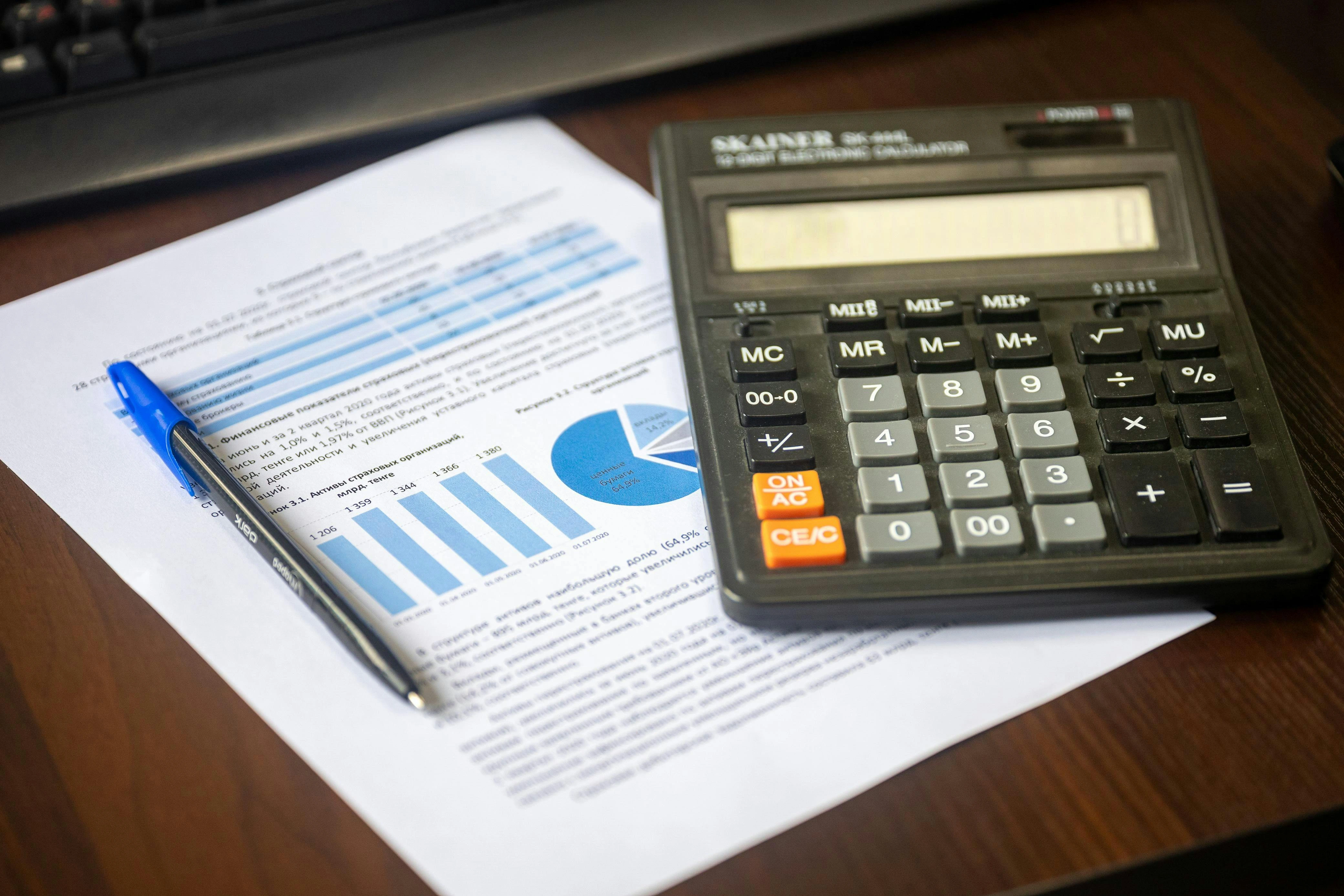
The Anxiety of Uncertainty in High-Stakes Testing
On the morning of her CMA Part 2 exam, Anika—a senior financial analyst from Bangalore—panicked. Her calculator, a trusty Casio fx-991EX she used throughout grad school, was flagged at the Prometric center. “It’s not on the list,” the test supervisor said flatly. Despite her pleading, it was confiscated. Anika was left to solve complex capital budgeting problems by hand. She passed—barely. But the damage was done: lost time, spiked cortisol, a rattled rhythm.
Stories like Anika’s aren’t uncommon. For a certification that prides itself on precision and professionalism, one misstep with your calculator can derail months of prep.
In a digital world, it seems absurd to trip over something as analog as a calculator. But CMA candidates face strict rules set not just by the IMA, but by Prometric testing centers. Misunderstand the policy, and your test-day advantage could become a liability. This guide aims to save you from that avoidable chaos.
Why This Topic Matters in 2025
A 2024 Gleim survey found that 18% of CMA candidates who didn’t pass on their first attempt cited “testing center issues” as a primary stressor—including improper calculators. With AI streamlining most finance workflows, today’s CMA candidates rely heavily on tech. But during the exam, you're stripped of spreadsheets and macros. All that’s left? Your brain—and your calculator.
And yet, many candidates show up with the wrong model.
Take Raj, a mid-career controller from New Jersey. He assumed any scientific calculator was acceptable. But his Casio had a QWERTY keyboard—which is banned. Security staff took it, and he had to borrow a basic backup. The result? He scored 350—just 10 points shy of passing.
That margin of error was likely avoidable.
In a high-pressure setting, the wrong device doesn’t just hurt your calculations. It dents your confidence. In 2025, where every score point could mean the difference between a promotion or plateau, this small but overlooked detail deserves real attention.
Approved Calculator Framework: What You Can (and Can’t) Bring
Prometric enforces strict calculator policies based on IMA guidelines. Here’s a decision-making framework you can use, whether you’re shopping or double-checking your model:
Approved Calculators (as of 2025):
- Texas Instruments BA II Plus
- Hewlett Packard 10bII+
- Any simple, four-function calculator
These are the only two financial calculators allowed. And yes, that includes only these models—no upgraded, graphing, or programmable versions.
Banned Features (Even If It's a Basic Calculator):
| Feature | Why It's Banned |
|---|---|
| QWERTY keyboard | Could store or type text |
| Programmable memory | Could preload formulas |
| Infrared/Bluetooth | Potential data transmission |
| Graphing displays | Provide unfair visual aid |
| Solar-powered-only | Risk of power failure |
Gray Zone Alert:
Some candidates try to bring a calculator “similar” to the approved ones. Prometric doesn’t care. If it’s not on the list, it won’t get in. Even subtle differences—like a solar-cell-only model without a battery—can result in rejection.
Real Challenge:
Imagine encountering a time value of money (TVM) question on bond amortization. You’ve memorized the BA II Plus keystrokes. But your substitute calculator lacks a function key. Now you're manually computing present value tables under time pressure. Risky.
The Human Friction: How Smart People Still Get It Wrong
This isn’t about IQ. It’s about assumptions—and burnout.
Myth #1: “If it worked in my MBA, it’ll work here.”
False. Many grad-school calculators are graphing or
programmable, which the IMA doesn’t allow.
Myth #2: “I can just use the calculator app on the screen.”
Nope.
The CMA exam does not provide an on-screen calculator.
You must bring your own, or you’ll be solving
cost-volume-profit analyses longhand.
Myth #3: “The staff will let me slide if I explain.”
Prometric follows a zero-exception policy. No
pleading, no logic, no leniency.
A Short Cautionary Tale:
Fatima, a 29-year-old finance manager, borrowed her cousin’s Casio fx-991MS the night before her exam—thinking all scientific calculators are alike. It looked harmless. On exam day, Prometric confiscated it. She was given a basic four-function backup. Half her quantitative section—variance analysis, standard costing—collapsed. She left the center in tears.
The CMA Calculator Game Plan: A Bulletproof Checklist
Here’s how to eliminate uncertainty and walk in like a pro:
Before Exam Week:
| Task | Notes |
|---|---|
| Buy the BA II Plus or HP 10bII+ | Stick to official models |
| Label it with your initials | Prevent swap confusion |
| Learn TVM, IRR, NPV keystrokes cold | Time-saver during the exam |
| Practice entire mock tests with it | Muscle memory matters |
| Check battery health | Replace 2 weeks before test |
24 Hours Before Exam:
| Task | Notes |
|---|---|
| Clean the calculator | No papers or cheat codes inside |
| Pack a backup model (same type) | Just in case |
| Double-check it’s in your clear zip pouch | No cases, covers allowed |
At the Prometric Center:
- Declare your calculator during check-in.
- Wait for staff inspection (don’t argue).
- If rejected, use your backup or four-function option they may provide.
This is the one domain where over-preparation is underrated. You don’t want to be the candidate who knew Section C like a CFO but flubbed due to a $40 tool.

Final Word from Experience: Why This Isn’t Just About Rules
You’re preparing for the CMA—not just to pass a test, but to prove something. To yourself. To your team. Maybe to a parent who still wonders what you actually do.
I’ve coached dozens of professionals through this process—seasoned VPs and fresh grads alike. The one regret they share? Underestimating the small stuff.
The calculator rule isn’t just red tape—it’s a character test in disguise. Will you take this as seriously as the material? Will you rehearse it until there’s no doubt?
Success on the CMA isn’t about brilliance. It’s about margin management. This is one of those margins.
From the Author’s Desk
I still remember one of my earliest clients—Jorge from Mexico City—saying, “I passed the CMA because I respected the exam.” Not feared. Not loved. Respected.
“Excellence is not about perfection. It’s about fewer avoidable mistakes.”
Need a visual checklist?
Download my CMA Exam Day Essentials PDF
Or reply
to this article with your calculator model—we’ll check it for you.